


Striking the Balance: What the Red Roses Can Teach Us About AI and Critical Thinking


With an unbeaten Test run since 2022 and 38 consecutive victories, it might have been easy to assume a Six Nations win for the Red Roses was a foregone conclusion.
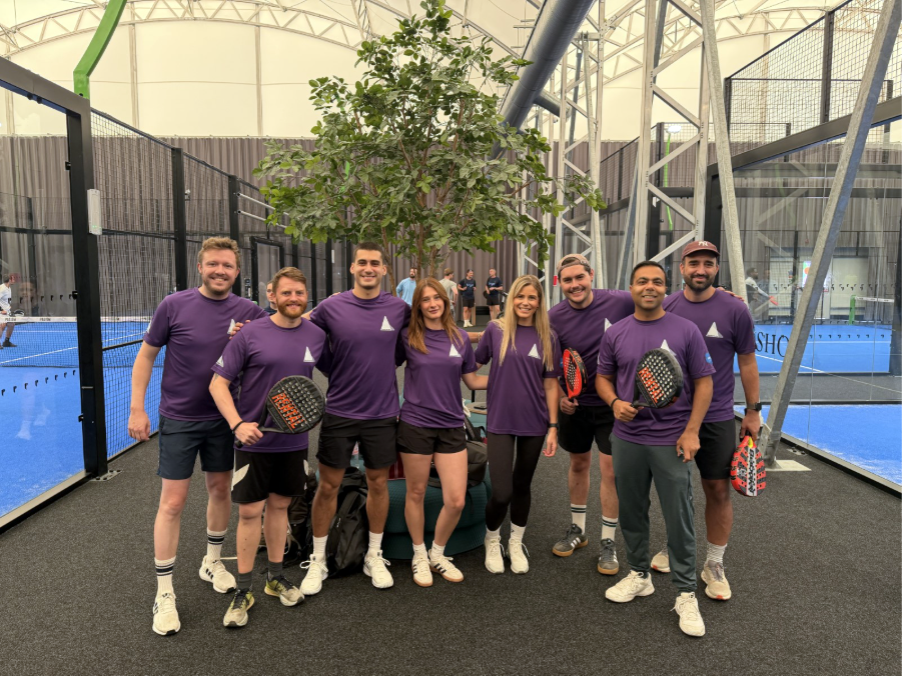
However, the reality on the pitch told a different story. France played with a level of intensity that was frankly worrying for England supporters. Behind the scenes, the Red Roses haven't had the most straightforward season; the squad has navigated significant churn, from multiple pregnancies to a string of challenging injuries.
How do you maintain a winning streak under that kind of pressure, especially with a backdrop of scepticism about whether they could do it again?
I believe the answer lies in a delicate equilibrium between the right tools (the elite support team and rigorous training plans) and immense creativity (the introduction of fantastic new players and fresh tactics). These two elements must work in perfect balance to achieve optimal output.
The "Cardio" of the Workplace: AI and the Erosion of Skill
This synergy between tools and creativity has me thinking about how we operate in the workplace, specifically regarding our reliance on software and Large Language Models (LLMs).
A sensational headline from an MIT study in November 2025 claimed that LLM usage "May Be Eroding Critical Thinking Skills." While we should take such headlines with a pinch of salt given how deeply LLMs have been integrated into our normal work-life in 2026, the underlying warning is worth noting.
Think of it this way: if the Red Roses only trained cardio for speed without building the foundational strength or running tactical drills, their performance would eventually crumble. Similarly, in the office, we need to understand how to keep the efficiency benefits of AI without losing the "muscle" of our creativity and critical thinking.
Order of Operations: Why "Human First" Matters
The MIT research offered a fascinating insight into how we use these tools. Nataliya Kosmyna noted:
“We found that the order in which students used the tools actually mattered. If they started out using ChatGPT and then were asked to write on their own, their neural engagement was lower than if they had started without tools and only later used the AI.”
The takeaway is simple yet profound: Try first, refine later. When we let AI set the foundation, we risk "switching off" the very neural pathways that drive original thought. If we want optimal output, and more importantly, long-term job satisfaction, we must protect the creative spark that happens during the initial "blank page" phase.
The Road Ahead
Just as a world-class rugby team must constantly evolve its training structure to stay ahead of the competition, businesses must evolve their relationship with technology.
The simple answer for now is to encourage a "human-first" approach to problem-solving, using AI as the polisher rather than the architect. But as more research emerges, society and business leaders need to stay as informed about the latest cognitive studies as they are about the latest LLM capabilities.
Winning, whether on the pitch at Twickenham or in the boardroom—requires us to use our tools to enhance our humanity, not replace it.
%20Medium.jpeg)

.jpg)




.jpg)



.jpg)


.jpg)




.jpeg)



