


NRF’26: Retail Innovation in Action

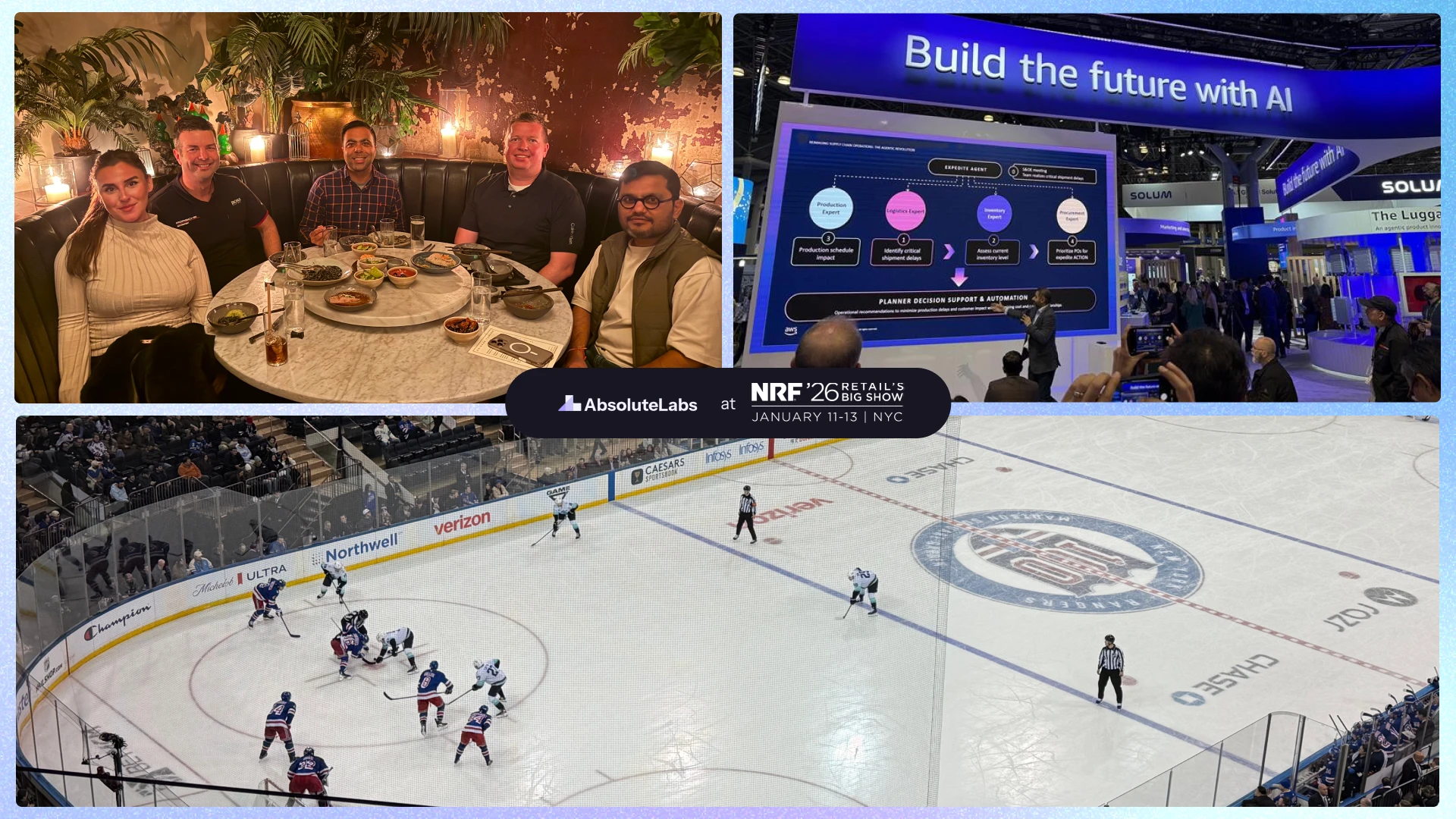
The 2026 edition of retail’s flagship event offered an up-close look at the technologies and ideas transforming commerce. Across three days in New York City, NRF demonstrated how retailers are moving rapidly from experimentation to execution, with artificial intelligence taking center stage, but far from the only innovation on display.
Retailers face rising expectations from both customers and employees. Shoppers increasingly demand the same convenience and personalisation they experience elsewhere in their lives, while store associates want tools that make operations more efficient and effective. NRF provided a hands-on perspective on how technology is meeting those needs.
1. Agentic commerce: turning ideas into action
A major theme was agentic commerce. AI assistants are moving beyond recommendations to guide complete shopping journeys, assembling baskets and completing transactions across merchants and platforms. While still early, these tools signal a shift toward more intelligent, proactive ways to serve customers.
Walmart’s integration with Google Gemini now enables discovery, cart building, and checkout all within an AI assistant using the Universal Commerce Protocol (UCP) for agent-driven transactions. Google and Shopify are partnering to position UCP as an open standard, allowing AI agents to transact across different commerce systems. Sessions at NRF highlighted generative agents as the “new front door” for shoppers, emphasising practical implementations of agentic commerce.
2. Unified commerce: the backbone of effective AI
Many of the most compelling AI applications at NRF relied on unified commerce. Connected inventory, pricing, promotions, fulfillment, and customer context are essential for AI agents to function effectively. Fragmented systems limit results, making unified commerce a prerequisite rather than a future goal.
Salesforce showcased “agentic unified commerce,” connecting stores, e-commerce, and order management systems to enable guided shopping and contextual search. SAP demonstrated AI embedded deeply into core retail operations, emphasising closed-loop decision-making and positioning AI as an operational necessity.
3. Stores: where technology proves its value
Even with AI in the spotlight, the most tangible impacts remain in stores. Tools that improve productivity, reduce friction, and enhance service demonstrate measurable operational value.
Ralph Lauren’s “Ask Ralph” is an AI-powered styling assistant that guides customers while offering a human-like touch. Microsoft highlighted startups using agentic AI to optimise inventory movement and adapt to local demand. Investment in store operations modernisation, including AI self-service, returns, RFID-enabled workflows, and analytics, was emphasised throughout the event.
4. Inventory intelligence: turning data into action
RFID, computer vision, and analytics are moving from pilot projects to core infrastructure. Accurate, item-level inventory improves availability, reduces errors, strengthens loss prevention, and feeds smarter forecasting.
Sensormatic Solutions showcased new capabilities across loss prevention, traffic insights, and inventory intelligence. StrataVision demonstrated AI computer vision for loss prevention, safety, and visitor engagement, highlighting measurable operational outcomes. NRF emphasised that item-level inventory accuracy now drives forecasting and customer experiences, making it foundational for modern retail.
5. Retail media: connecting in-store experiences to measurable outcomes
Retail media is expanding beyond websites and apps into physical stores through digital signage and point-of-sale screens. Linking exposure directly to sales enables clear ROI and turns in-store media into a strategic channel.
Sessions such as “In-store retail media networks: Screen time that pays” highlighted programmatic advertising for digital signage. POS-adjacent screens now enable dynamic messaging based on time, weather, or stock levels, with closed-loop reporting tied to point-of-sale outcomes.
Innovation grounded in fundamentals
NRF reinforced that technology works best when it supports, rather than replaces, the basics. Shoppers continue to value quality, service, and authenticity, and thoughtfully applied technology enhances these experiences, providing convenience while preserving the human connection.
Looking ahead
NRF’26 showed that the next chapter of retail will be defined by both innovation and execution. From agentic commerce and unified operations to intelligent stores, inventory precision, and in-store media, the tools are in place. Retailers who thrive will be those who balance cutting-edge technology with the timeless essentials of service, quality, and customer experience.
Get in touch with our retail technology experts to discuss these points, and your specific business strategy.
.jpg)



.jpg)


.jpg)


.jpg)


.jpeg)



